Your brand lives everywhere your customers look
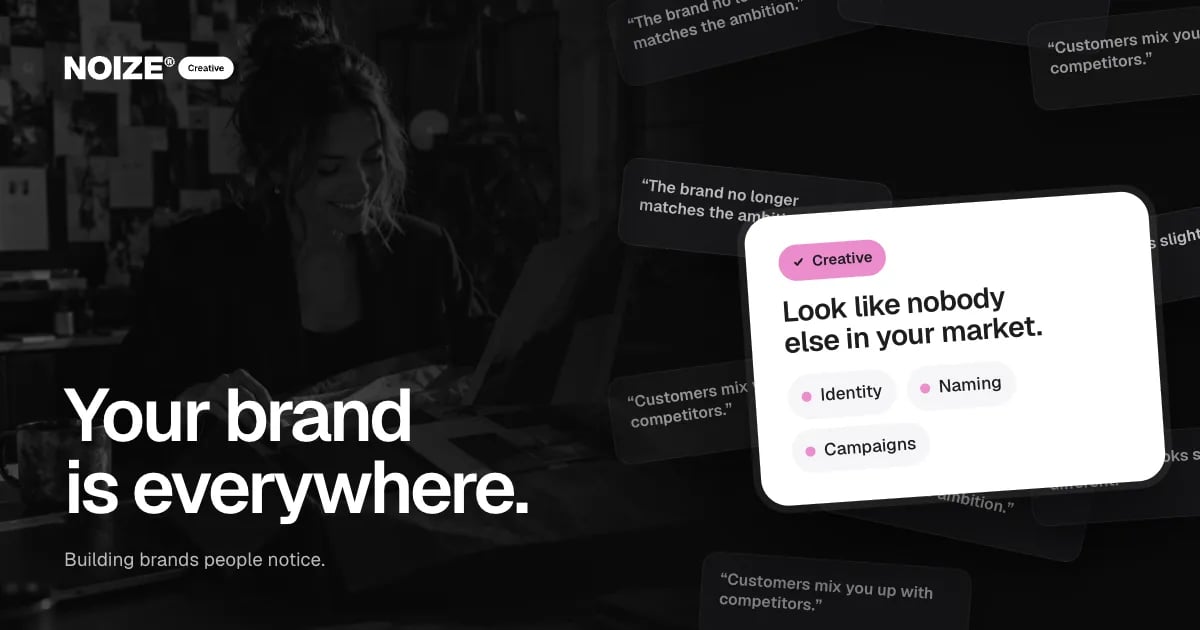
The brand no longer matches the ambition. Every piece looks slightly different. Customers mix you up with competitors.
Most owners think of the brand as the logo. Customers don't. They meet the business in a dozen places, often in the same week, and they form an opinion from all of them together. If those places disagree, the opinion is "not sure", and unsure customers rarely buy.
Here are eight places your brand is being judged right now, and what each one needs to get right.
The short version
- Customers judge a brand across many touchpoints at once, from the search result and the website to the van, the packaging and the invoice.
- When those places disagree, trust drops and so does the price people are willing to pay.
- A brand system, applied by Creative alongside Print, Digital and Marketing, makes every touchpoint agree.
- The afternoon audit below shows where yours doesn't.
01The search result
For many customers, the first impression is a line of text on Google and a small icon. The business name, the description and the reviews have to signal what you do and why you're worth a click. A distinctive name and a clear promise do more work here than any visual.
02The website
The website is the brand's hardest-working surface. It has to look like the business, sound like the business and lead the visitor to a next step. When brand and website are designed by different people, something is always lost: the tone drifts, the type changes, the photography stops matching. Digital and Creative build from one system for exactly that reason.
03The social profile
People check the profile before they enquire. A feed that looks like five different businesses tells them the business is improvising. A feed with a consistent look and voice tells them it knows what it is doing.
04The business card and the proposal
These are the moments a customer is deciding. A proposal that looks like a template and a card printed on thin stock both say the same thing about price and quality. A considered one says the opposite, before anyone reads the numbers.
05The shopfront, the signage and the van
The brand has to work at a distance, at speed and in sunlight. A logo that looks good on a laptop can fall apart on a building. Print and Creative test a mark at the smallest size and the largest sign before it is signed off, so it holds everywhere.
06The packaging
If you sell a product, the box is the first time a customer touches the brand. The opening, the materials and the finish all set expectations. Packaging that gets photographed and shared is marketing you have already paid for.
07The uniform and the people
Your team wears the brand and speaks for it. Uniforms are the visible part. The bigger part is the language: how people answer the phone, write an email or describe what you do. Messaging guidelines give the team the words, so the brand sounds the same from everyone.
08The invoice and the email signature
Small, frequent and usually forgotten. They are often the last thing a customer sees from you, and an off-brand invoice from a premium business quietly undoes some of the impression the rest built.
> I've built ecommerce businesses where a rebrand was the single biggest lift in conversion we ever made. Same product, same price, same ads. The only thing that changed was that every touchpoint finally looked like it came from the same company.
Why consistency is worth money
Recognition builds trust before a conversation starts, and trust is what lets a business charge properly. A consistent brand also makes every marketing dollar work harder, because each ad, post and sign reinforces the last instead of starting from scratch.
It saves money internally too. When there is one logo, one colour set, one type system and one voice, the team stops reinventing them. Production gets faster. Mistakes get rarer.
“We've had nothing but compliments and praise since making the change.”
What NOIZE Creative builds
Creative develops the identities, ideas and content that bring businesses to life: brand identity, naming, messaging, brand guidelines, campaign creative, packaging, photography, video and social content. Every piece is built on strategy, so the brand looks right because it is right.
Then the brand doesn't have to travel alone. Print makes it physical. Digital puts it on a platform. Marketing takes it to an audience. Each one starts from the same files and the same guidelines, so the eight places above finally agree. See creative.noize.com.au.
Signs it is time for a rebrand
You hesitate before handing over a card. The business has moved into a new market or a new price point and the brand hasn't followed. Customers confuse you with a competitor. The team apologises for the website. Or the brand was designed when the business was a fraction of its current size.
A good rebrand keeps what customers already recognise and changes what is holding the business back. It is a strategic decision first and a design project second.
How to audit your brand in an afternoon
Gather one of everything a customer might see: a business card, a proposal, an invoice, a screenshot of the website on a phone, the social profile, a photo of the signage and the van, a uniform and a piece of packaging if you have one. Lay them out on a table.
Then ask three questions. Do they look like the same business? Do they sound like the same business? Would a stranger know what you do and why you're different from any one of them? Most owners find at least three pieces that fail the test. Those are where the brand is losing trust, and they are usually cheap to fix once the system is clear.
What a brand system includes
A brand system is the set of rules that makes consistency easy. It usually covers the logo and how it is used, colour, typography, photography and illustration style, tone of voice and key messages, and templates for the pieces the team creates most often. Good guidelines are short enough to use and specific enough to follow.
Related reading
- The physical side of a brand, and why it still matters
- The website is the front door. The systems are the building.
Common questions
What does a branding agency do beyond a logo?
Brand identity, naming, messaging, guidelines and the creative that applies them across every touchpoint. The logo is one part of a larger system.
How long does a rebrand take?
It depends on scope. A focused identity can take weeks; a full rollout across signage, packaging, website and uniforms is planned in stages so the business never looks half old and half new.
Do I need brand guidelines?
If more than one person creates anything for the business, yes. Guidelines are what keep the brand consistent when you're not in the room.
Can you work with our existing logo?
Often. If the logo is recognised and works at every size, we build the rest of the system around it rather than starting again.
How do I know if my brand is consistent enough?
Lay out everything a customer sees, from cards and proposals to the website on a phone, and check whether they look and sound like one business. If you hesitate over any piece, it needs attention.
Your first strategy conversation is on us.
Have a chatThe brand for business.