Twelve suppliers or one partner: the hidden cost of running a business by committee
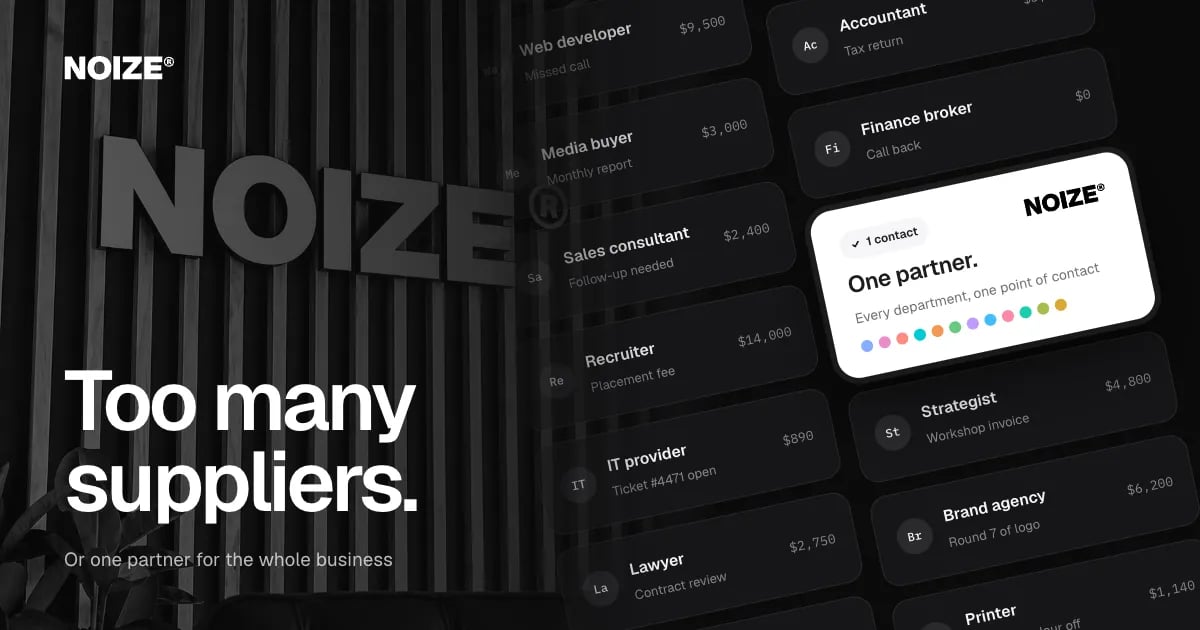
A strategist, a brand agency, a printer, a web developer, a media buyer, a sales consultant, a recruiter, an IT provider, a lawyer, a bookkeeper, an accountant and a finance broker. That is twelve suppliers, and plenty of Australian businesses have most of them.
None of them are the problem on their own. Each one was hired to fix something real, and most of them do. The cost sits between them, and it rarely shows up on an invoice. It shows up in the owner's week, in work that has to be redone, and in decisions that get made in the wrong order.
These are the seven hidden costs we see most often when a business is run by committee.
The short version
- For many owners, one business partner in Australia covering every department replaces a dozen suppliers.
- Running a business through twelve separate suppliers costs more than the invoices show.
- The same brief gets written again and again, the work stops matching, problems fall between suppliers, spend happens in the wrong order, access is scattered, handovers are slow and the owner ends up as project manager.
- One partner with multiple departments working to one plan removes most of those costs.
- You can start with a single department and add the rest when you need them.
01The same brief, written twelve times
Every supplier needs to understand the business before they can help it. So the owner explains the customers, the offer, the pricing and the goals, again and again. Each explanation is a little different depending on the day, and each supplier works from their own version.
Over time those versions drift apart. The brand agency thinks the business is premium. The media buyer is running discount ads. The website talks to a customer the sales team stopped chasing a year ago. Nobody is wrong, exactly. They were just briefed at different times.
02Work that doesn't match
The brand agency designs one thing. The printer reproduces something slightly different. The web developer adds a third version. The social media manager uses the logo from an old email signature.
Customers see all of it, usually in the same week. A business that looks slightly different everywhere looks less certain than it is. That uncertainty costs trust, and trust is the thing that turns a visitor into a customer.
03Problems with no owner
Leads dry up. The media buyer says the ads are fine. The developer says the website is fine. The sales consultant says the leads are poor quality. Everyone is partly right, and nobody is responsible for the whole answer.
So the problem sits. Meetings get booked. Reports get exchanged. The owner tries to referee between people who each see one part of the funnel. Weeks pass before anyone changes anything, and the budget keeps running the whole time.
04Decisions made in the wrong order
Without one plan, spend follows whoever asks loudest. A new website gets built before the brand is settled, so it needs redesigning six months later. Ads run before the follow-up process is ready, so good leads go cold. A salesperson is hired before there is a sales process for them to run.
Each decision made sense on its own. Together they cost twice as much as they should, because the business paid to do things, then paid again to do them in the right order.
05Twelve sets of logins and invoices
Every supplier brings an account, a contract, a login and a monthly bill. Access to the domain sits with a developer who moved on. The social accounts are owned by an agency from 2019. Renewal dates get missed. When a staff member leaves, nobody is quite sure what they had admin rights to.
None of this feels urgent until the day it is. Then it becomes a week of chasing passwords while the website is down.
06Slow handovers
Work waits while one supplier finishes before the next can start. The copy is late, so the designer waits. The design is late, so the developer waits. The site is late, so the campaign waits.
A two-week job becomes two months, not because anyone is slow, but because the hand-off between teams that have never met takes longer than the work itself.
07The owner becomes the project manager
This is the largest cost, and the hardest to see. Every hour spent chasing, briefing and reconciling suppliers comes out of the hours you have to lead the business, to sell, to look after your best customers, or to switch off.
Most owners didn't start a business to manage a supplier list. They started it to build something. The committee slowly takes that time away.
> I've generated more than 100,000 leads across my own businesses and our clients'. The campaigns that failed rarely failed on their own. They failed at a handover: a page that wasn't ready, a follow-up nobody owned. Fix the gaps and the same spend goes much further.
What one partner changes
NOIZE is a multidisciplinary business group: multiple departments under one brand, working from one plan with one point of contact.
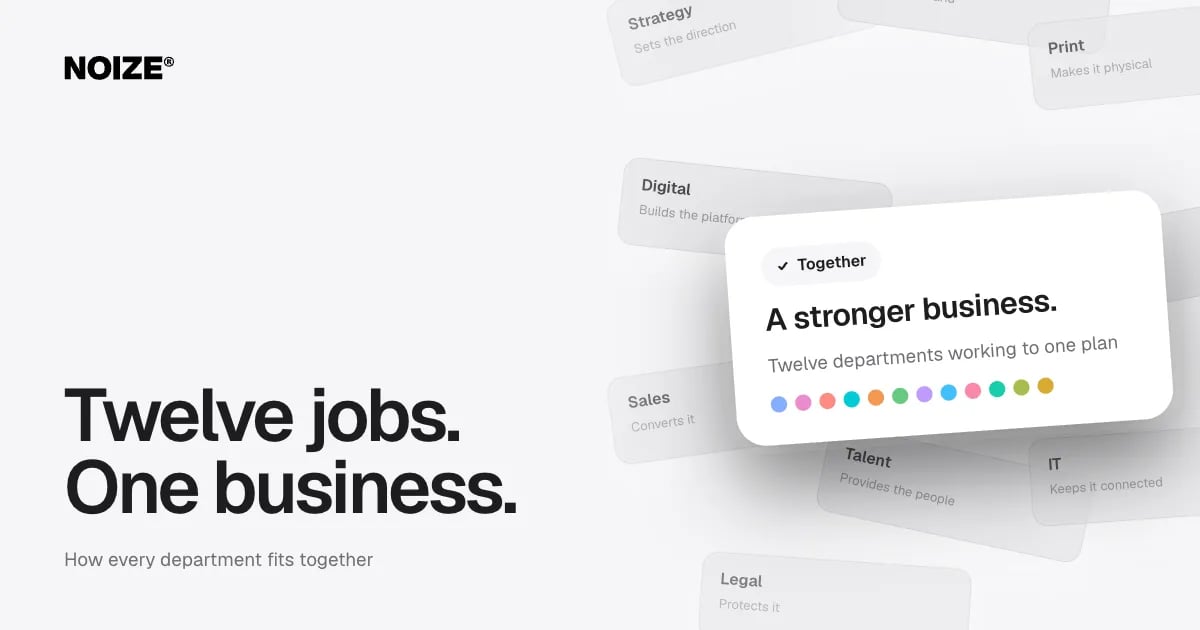
Strategy sets the direction. Creative builds the brand. Print makes it physical. Digital builds the platform. Marketing creates demand. Sales converts it. Talent provides the people. IT keeps it connected. Legal protects it. Books keeps the numbers current. Accounting makes sense of them. Finance helps fund what comes next.
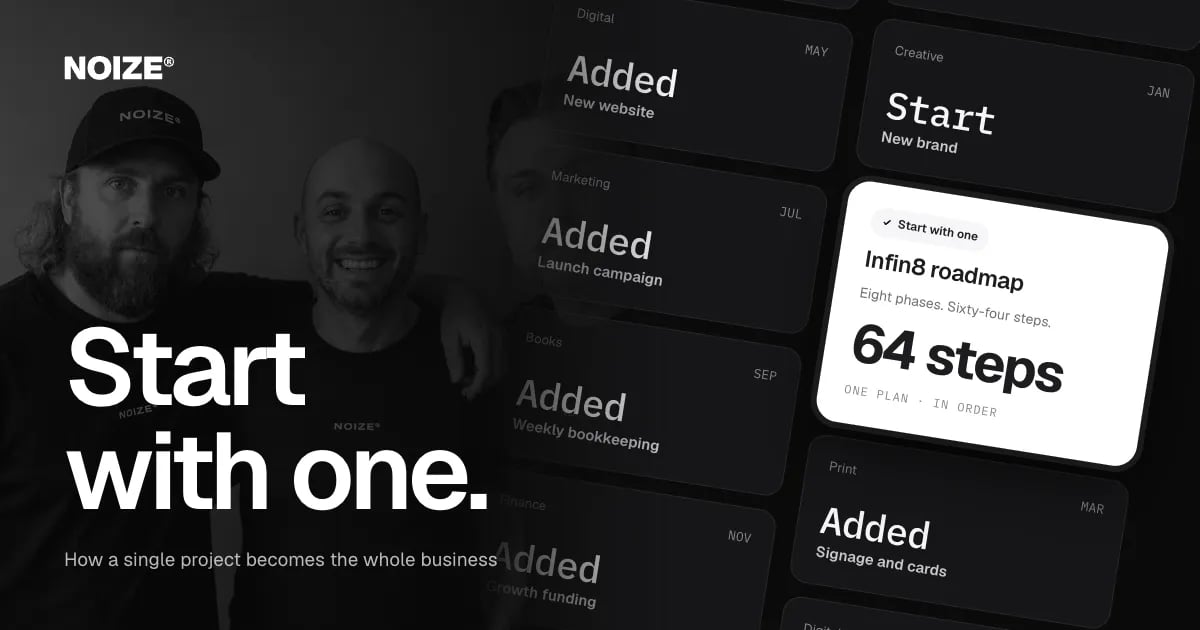
Each of the seven costs above shrinks for the same reason. The departments already know each other, already share the brief and already answer to the same plan. That plan is built with the Infin8 System: eight phases and sixty-four steps that look across the whole business, not just the problem that walked in the door.
The brief is written once. The work is designed to fit together. When something isn't working, one team is responsible for finding out why. And you get your week back.
“They have been nothing short of amazing and have played a major part in our success!”
Start with one
You don't need to move twelve suppliers at once. Most clients begin with a single department: a brand, a website, or bookkeeping that is finally up to date. They add the next department when the need appears, and the next team already knows the business.
Some keep an accountant or lawyer they have trusted for years and bring NOIZE in for everything else. That works too. The point isn't to own every relationship. It is to stop the gaps between them costing you money.
Do one thing you need. Or everything that matters.
Related reading
- How it fits together: every department in the order a business needs it
- Start with one: how a single project becomes a business that runs as one
Common questions
Is one partner more expensive than separate suppliers?
Not usually. You pay for the work, not for repeated briefings, rework or the hours you spend coordinating. Fewer handovers also means fewer mistakes to fix.
Can I keep some of my existing suppliers?
Yes. Many clients keep an accountant or lawyer they trust and bring in NOIZE for everything else. We work alongside them.
What is a multidisciplinary business group?
A single business with specialist departments across strategy, brand, technology, marketing, sales, people, legal and finance, working to one plan for each client.
Where should I start?
With a conversation about where the business is and where you want it to go. From there we recommend the first department, and the order of the rest.
How does NOIZE keep multiple departments working to one plan?
Every engagement starts with an Infin8 assessment and a shared roadmap. Each department works from that roadmap and the same brief, with one point of contact for you.
Your first strategy conversation is on us.
Have a chatThe brand for business.