Start with one: how a single project becomes a business that runs as one
Nobody arrives at NOIZE asking for multiple departments. They arrive with one problem. The brand no longer matches the ambition. The website looks fine and converts nobody. The receipts are in a shoebox and the BAS is overdue.
That first problem is the right place to start. It is real, it is urgent, and fixing it makes an immediate difference. What changes with a business group is what happens after it is fixed.
The short version
- Every client starts with one problem, and that is the right place to begin.
- The first project builds deep knowledge of the business, which usually reveals the next need.
- With a business group, the next department picks it up with that context already in place.
- The Infin8 System turns the whole path into a costed roadmap, and you pay for each department only when you add it.
The first project tells you a lot
A rebrand is never only a rebrand. To design a brand properly you have to understand the customer, the offer, the pricing and the competition. By the end of the project, the team knows the business better than most suppliers ever will.
That knowledge usually reveals the next need. The new brand has to go on the signage and the vans. The website no longer matches it. The launch needs an audience. In a business run by separate suppliers, each of those needs means a new search, a new brief and a new relationship. Here, the next department picks it up with the context already in place.
A path, not a package
Here is a typical path, drawn from the kind of work we do every week.
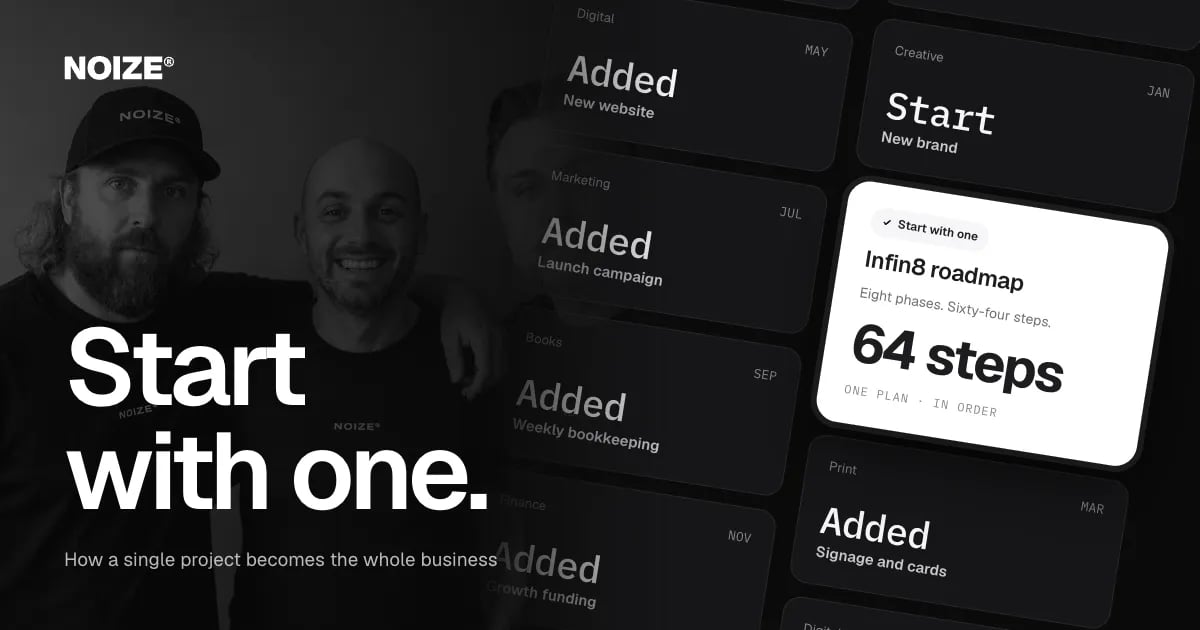
It starts in January with a new brand from Creative. In March, Print rolls it out to cards, signage and uniforms so the business looks the same everywhere. In May, Digital rebuilds the website around the new brand and connects the enquiry form to the CRM. In July, Marketing launches a campaign to an audience who finally sees a consistent business. By September, the growth in transactions means Books takes over weekly bookkeeping. In November, with clean numbers and a clear plan, Finance arranges funding for a second location.
None of that was sold in January. Each step happened because the previous one made it the obvious next move.
“A full new brand & website, and very happy with the results.”
Where the Infin8 System fits
The path isn't left to chance. Every engagement is planned with the Infin8 System: eight phases and sixty-four steps that assess the whole business, not just the problem that started the conversation.
The output is a prioritised, costed roadmap in plain English. It shows what to fix first, what can wait, and which department picks up each step. You can follow it with NOIZE, with your existing suppliers, or a mix of both. The roadmap is yours either way.
The phases carry their own names, each ending in eight: INCUB8, CRE8, FABRIC8, ACCELER8, OPER8, MOTIV8, FACILIT8 and EVALU8. Together they cover the life of a business from the first idea to the next evolution.
> I've co-founded companies and been through successful exits, and the businesses that sold well had one thing in common. Someone had a plan for the whole thing, in order, written down. The ones that struggled were run one urgent problem at a time.
Pay as you grow
Starting with one department also means paying for one department. There is no retainer for capability you don't use yet. As the business grows, you add the next department when the need is real and the budget is there.
For an owner, that is the opposite of the usual trade-off. You don't have to choose between a cheap supplier for one job and an expensive full-service retainer. You start small with a partner that can grow with you.
Why it feels different
Clients often describe the same moment. A few months in, they realise they haven't had to explain the business to anyone new. The brief was written once. The brand, the website and the campaigns match. When something isn't working, they make one call.
That is the point of a business group. It isn't about having every service under one roof for the sake of it. It is about every department starting from the same understanding of your business, so each project makes the next one faster and cheaper.
What it changes for your team
The effect isn't limited to the owner. Staff stop translating between suppliers. The marketing coordinator no longer has to chase a developer for a landing page, because Digital and Marketing are already planning the campaign together. The office manager no longer keeps a spreadsheet of passwords, because IT holds the access register. The bookkeeper and the accountant stop emailing each other for missing statements, because they work from the same records.
Those small frictions add up to hours every week. Removing them is rarely the reason a client starts working with us, but it is often the reason they stay.
There is a practical benefit for decisions too. When the person who designed the brand, the person who built the website and the person reading the sales numbers all sit in one group, a question like "why did enquiries drop in March?" gets answered in a day, not argued about for a month.
How to choose your first department
If you're not sure where to start, three questions usually point the way.
What is costing you the most right now, in money or in time? What is blocking the next stage of growth? And what would you fix first if you knew the rest would follow in the right order?
Whatever the answer, it is a fine place to begin. Do one thing you need. Or everything that matters. Start with one department. Add talent as you need it.
A note on timing
There is no right moment to add a department, only a right reason. A common mistake is adding too much too soon: a full marketing program before the website converts, or a sales hire before there is a process. Another is waiting too long: running payroll by hand long after it started costing an afternoon a fortnight.
The roadmap helps here. Because each step is costed and sequenced, you can see when the next department will pay for itself, and plan the budget for it in advance.
Related reading
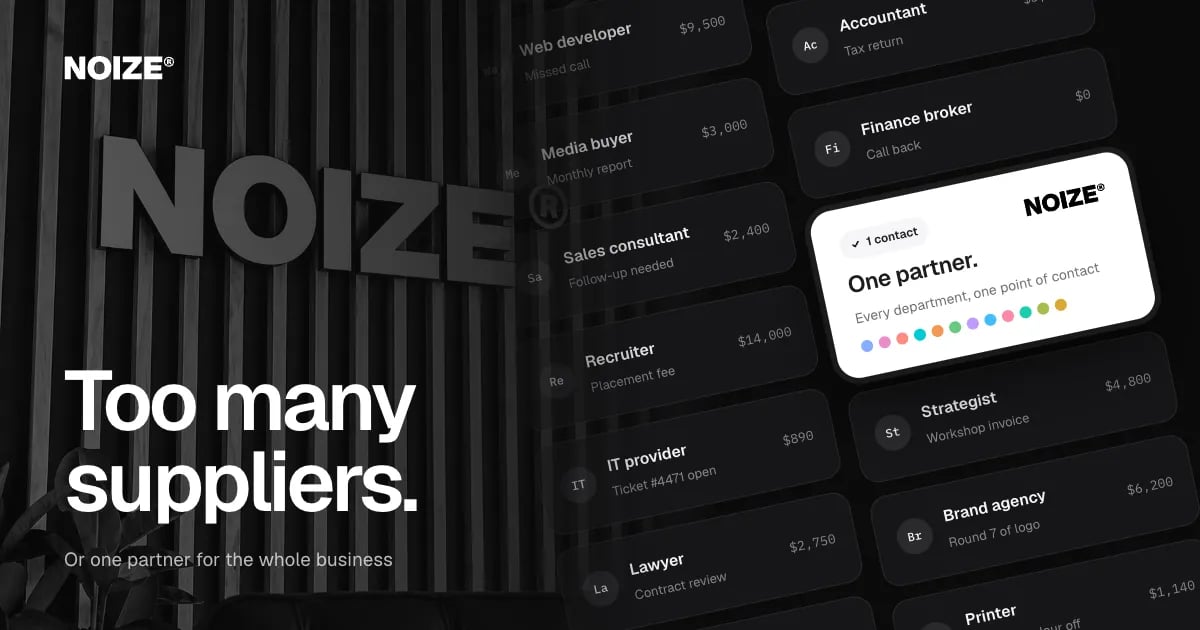
- Twelve suppliers or one partner: the hidden cost of running a business by committee
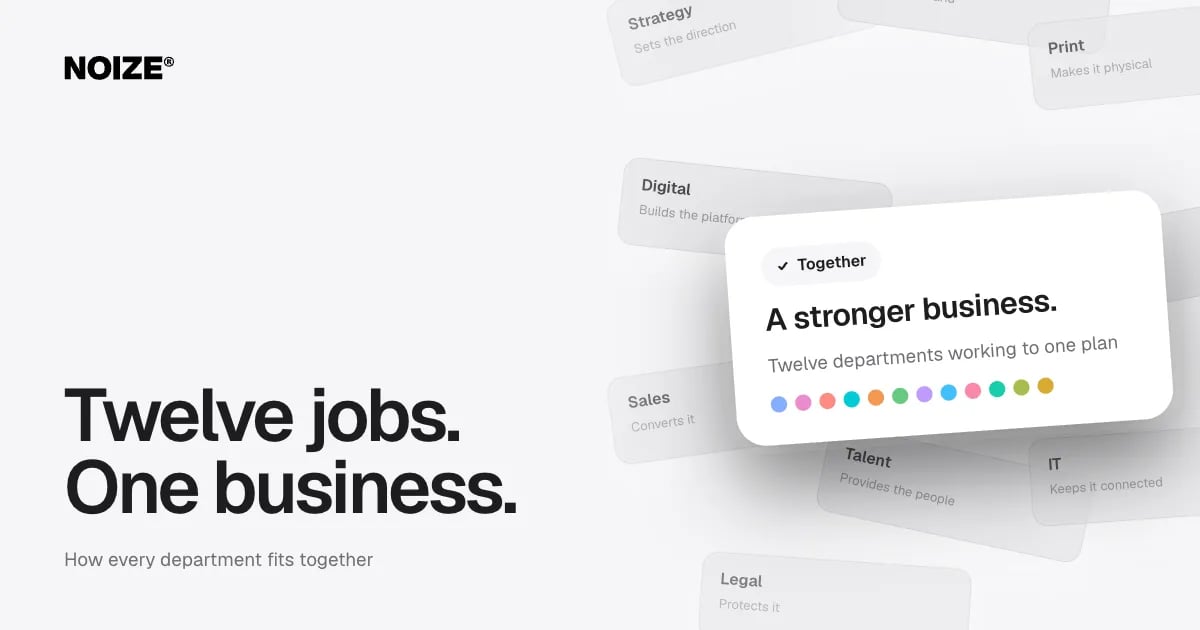
- How it fits together: every department in the order a business needs it
Common questions
Do I have to commit to more than one department?
No. Each department can be engaged on its own. Many clients start with one project and decide later whether to add more.
What is the Infin8 System?
The method NOIZE uses to plan every engagement: eight phases and sixty-four steps that assess the whole business and produce a prioritised, costed roadmap in plain English.
Can I use the roadmap with other suppliers?
Yes. The roadmap is yours. You can deliver it with NOIZE, with your current suppliers, or a combination.
How long before the next department gets involved?
It depends on the business. Some clients add a second department within weeks, others after a year. It happens when the need is real, not on a schedule.
Is there a minimum spend to start?
No fixed minimum. You pay for the department and the scope you choose, and add more as the business grows.
Your first strategy conversation is on us.
Have a chatThe brand for business.