Marketing that knows where the customer goes next
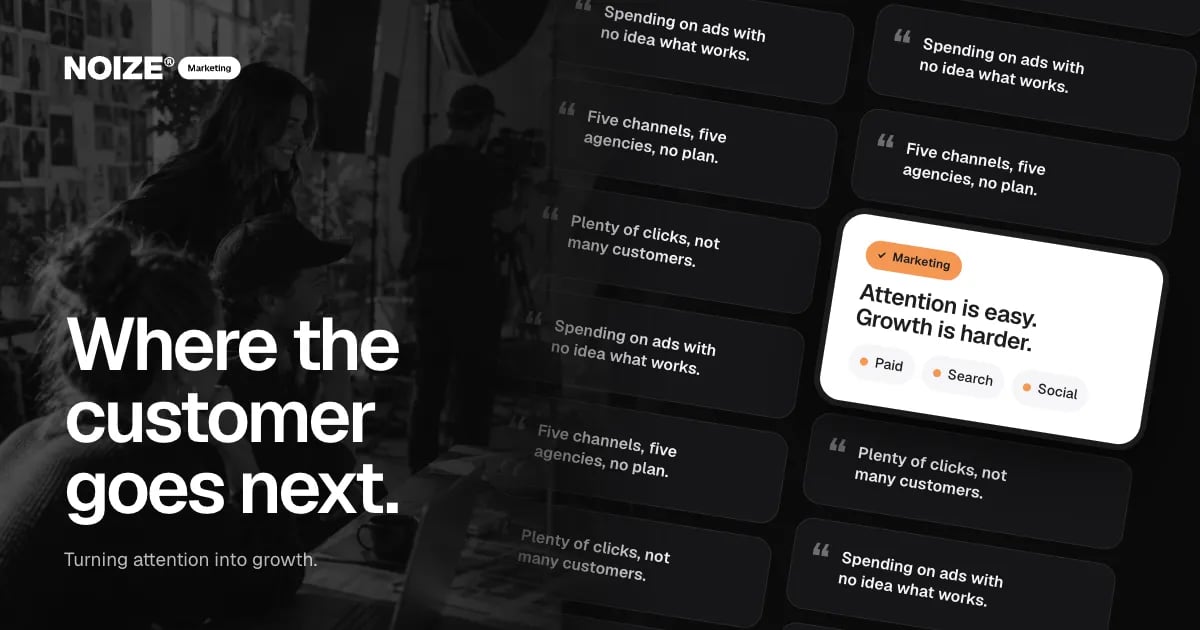
Spending on ads with no idea what works. Five channels, five agencies, no plan. Plenty of clicks, not many customers.
Most marketing stops at the click. The ad runs, someone taps it, a report says the campaign performed. What happens next, whether that person enquired, whether anyone called them back, whether they bought, sits in someone else's system and someone else's job.
Attention is easy to buy. Growth is harder. The difference is marketing that knows where the customer goes next and plans for it. Here are seven ways that shows up in practice.
The short version
- Marketing that grows a business doesn't stop at the click.
- It starts with the offer, runs every channel as one plan, measures from the ad to the sale, sends people to pages built for them, hands leads to Sales properly, leads with strong creative and builds search visibility that compounds.
- The monthly review below keeps the budget moving towards the channels that produce customers.
01It starts with the offer, not the channel
Before choosing between Meta, Google, LinkedIn or email, decide what you are offering, to whom, and why it is worth their attention. A weak offer on the best channel loses to a strong offer on an average one.
Bring the offer and the goal. Marketing plans the channels and how the result is measured. That order matters, and it is the reverse of how most campaigns start.
02One plan instead of five channels
When search, social, email and paid media are run by separate suppliers, each optimises for its own report. Search wants clicks. Social wants engagement. Email wants opens. Nobody owns the sale.
An integrated plan runs every channel against the same goal and the same budget. Search catches the demand social creates. Email keeps the people who weren't ready yet. Retargeting brings back the ones who left. Each channel has a job, and the jobs connect.
03It measures from the ad to the sale
Impressions, likes and reach are easy to grow and hard to bank. The numbers that matter are cost per qualified enquiry, conversion rate and cost per customer.
Measuring those means connecting the ad platforms to the website and the website to the CRM. Once that link exists, you can see which campaigns produce customers and which only produce traffic, and move the budget accordingly.
04It sends people somewhere built for them
An ad that sends every visitor to the home page wastes most of its spend. Each campaign needs a landing page built for that offer and that audience, with one clear next step.
This is where Marketing and Digital work as one. Landing pages are built, tested and improved alongside the ads, so the message in the ad and the page match.
> I've generated more than 100,000 leads, and the expensive lesson is that a lead is not a result. The campaigns that grew businesses were the ones where we knew exactly what happened in the first hour after someone enquired. The rest were very well-targeted noise.
05It hands leads to Sales properly
This is where most marketing value disappears. The enquiry arrives. Nobody replies for three days. The lead goes cold. Marketing says the leads are good. Sales says they aren't.
Integrated marketing agrees with Sales what a qualified lead looks like, how fast it gets a reply and what the follow-up sequence is. Both teams see the same pipeline. More of the leads you already pay for become customers.
06It puts the idea before the targeting
Ad platforms now target well for everyone. The difference between campaigns is increasingly the creative: the idea that makes someone stop scrolling.
That is why Marketing works with Creative on every campaign, and tests ideas, not just colours and button labels. Strong ideas lower costs across every channel at once.
07It compounds
Paid media stops when the budget stops. Search and content keep working. A plan that builds organic visibility alongside paid campaigns gets cheaper over time, because more customers find you without an ad.
Rank higher. Stay there. SEO is slow to start and powerful once it is running, which is why it belongs in the plan from day one.
“The top marketing agency I've worked with on the Gold Coast.”
What NOIZE Marketing covers
Marketing strategy, Meta Ads, Google Ads, Microsoft Ads, paid social, organic social, SEO, content marketing, email marketing, retargeting, campaign management, analytics and conversion optimisation, all run as one plan.
Because Marketing sits inside a business group, the plan doesn't stop at the edge of the channel. It connects to the brand Creative built, the platform Digital runs and the pipeline Sales manages. That is what turns attention into growth. See marketing.noize.com.au.
How to tell if your marketing is working
Ask three questions. Can you say what last month's customers cost to acquire? Do you know which channel brought in your best customers, not just the most visitors? And does every enquiry get a reply within a day?
If the answer to any of them is no, the problem isn't more spend. It is the connection between the spend and the sale.
A simple monthly marketing review
Once measurement is in place, a short monthly review keeps the plan honest. Look at spend by channel, qualified enquiries by channel, cost per qualified enquiry, conversion to customer and cost per customer. Then ask one question: where would the next dollar do the most work?
Most months the answer is to move a little budget from the channel with the most clicks to the channel with the most customers. Over a year, those small shifts compound into a marketing plan that costs less and produces more.
Where local search fits
For businesses that serve a region, local search often outperforms everything else. A complete Google Business Profile, consistent details across directories, genuine reviews and pages written for the areas you serve help you appear when people nearby search. Whether you work across Brisbane, the Gold Coast or nationally, it belongs in the plan.
Related reading
Common questions
What is integrated marketing?
Running every channel, from search and social to email and paid media, as one plan with one budget and one set of measures, so the channels support each other.
How much should a business spend on marketing?
It depends on the margin, the sales cycle and the goal. We start by working out what a customer is worth and what you can afford to pay to acquire one.
How long does SEO take to work?
Usually months rather than weeks. It is slower than paid media but keeps working after the spend stops, which is why we plan both together.
Can you work with our in-house marketing team?
Yes. Many clients have an in-house team and bring NOIZE in for specialist channels, strategy or measurement.
Which is better for small business, Google Ads or Meta Ads?
They do different jobs. Google Ads catches people already searching for what you sell. Meta Ads creates interest among people who aren't searching yet. Most businesses get the best result from both, planned together, with the budget weighted towards whichever produces customers at the lowest cost.
Your first strategy conversation is on us.
Have a chatThe brand for business.