Funding the next move, with the whole plan in view
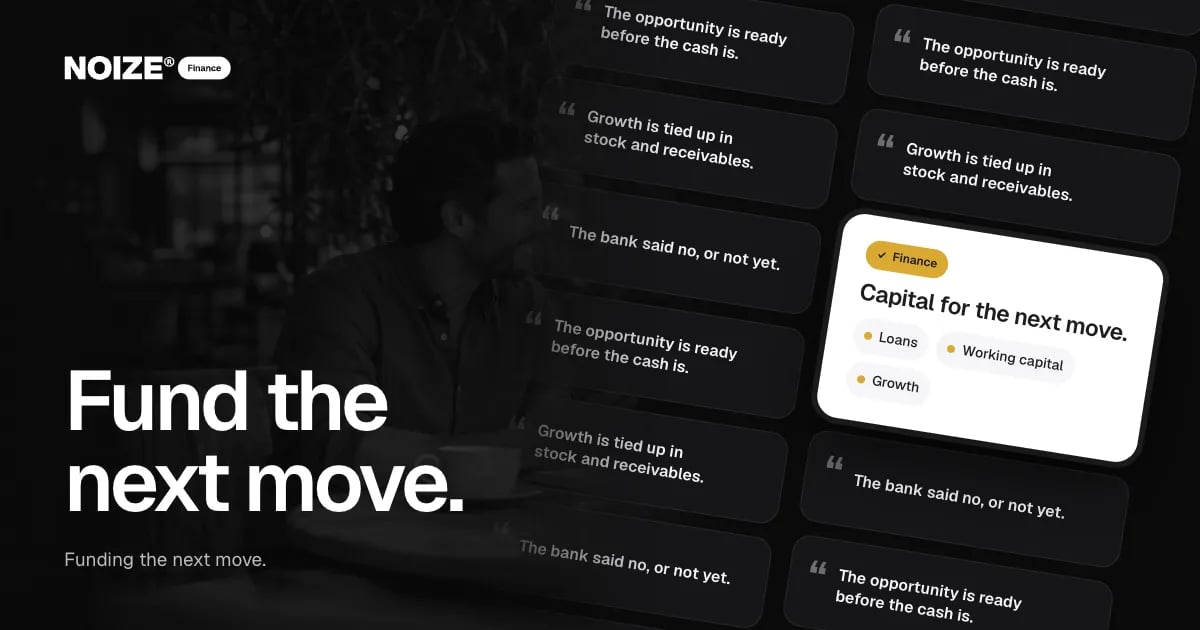
The opportunity is ready before the cash is. Growth is tied up in stock and receivables. The bank said no, or not yet.
Capital is rarely the first thing a business needs, but it is often the thing that decides whether the next move happens. A competitor comes up for sale. A large contract needs stock up front. A second location becomes available. The timing is set by the opportunity, not by the bank.
Funding works best when it is matched to a clear plan and prepared before it is needed. This guide walks through how NOIZE Finance approaches it, step by step. NOIZE provides administrative support and business strategy. Where work is outside our skillset, or the law requires it, we make sure an appropriately qualified professional is involved.
The short version
- Funding works best when it is matched to a clear plan and prepared early.
- Define the use of funds, match the type of funding to the job, have the numbers ready, know the alternatives when a bank says not yet, protect the deal with Legal, and prepare before the opportunity arrives.
- Capital multiplies whatever it is added to, so add it to a good plan.
Step 1: Define the use of funds
Lenders and investors fund plans, not hopes. The first step is writing down exactly what the money is for, how much each part costs, when it is needed and what it returns. "About $500k for expansion" becomes a fit-out, stock and two hires, phased over eighteen months.
That clarity changes the conversation. It also often reduces the amount needed, because a phased plan doesn't require all the capital on day one. When the plan itself needs sharpening, Finance hands off to Strategy.
Step 2: Match the funding to the job
Different needs suit different funding. Working capital helps when growth is tied up in stock and receivables. Equipment and asset finance suit specific purchases. Business loans fund defined projects. Growth capital supports expansion. Commercial property loans fund premises. Private lending can move faster when timing or history make a bank harder.
Matching the type of funding to the job usually produces more suitable terms and fewer surprises than taking whatever is offered first.
Step 3: Get the numbers ready
Lenders read the numbers before they read the plan. Expect to provide recent financial statements, current profit and loss, BAS lodgements, aged debtors, bank statements and a forecast showing the business can service the debt.
This is where being part of a group helps. Accounting prepares the statements and forecast. Books has the records current. The funding file comes together in days, not weeks, and it is consistent.
> I've co-founded companies and invested in dozens of others, and I've seen good businesses miss opportunities because the paperwork wasn't ready. The deal didn't wait. The businesses that moved quickly were the ones whose numbers were already in order.
Step 4: Know your options when the bank says not yet
Banks decline good businesses for reasons that have little to do with quality: a short trading history, limited security, a fast-moving opportunity or a sector outside their appetite. "Not yet" is common, and it is rarely the end.
Non-bank and private lenders, structured differently, can often decide faster and with different criteria. The cost is usually higher, so they suit specific situations: bridging, time-sensitive deals or businesses building their history.
Step 5: Protect the deal
When funding supports a transaction, buying a business, a property or a competitor, the money and the paperwork need to arrive together. Loan offers expire. Settlement dates are fixed. Contracts need review.
Finance works alongside Legal and Accounting so the deal is funded, protected and settled on time.
Step 6: Prepare before the opportunity
The best time to prepare for funding is before you need it. Investor readiness means records are clean, the structure is right, the plan is written and the story is clear. When the moment arrives, the business moves in weeks rather than months.
“Things really got moving beyond our expectations.”
Why funding works better with the whole plan in view
Capital multiplies whatever it is added to. Added to a clear plan, it accelerates growth. Added to a vague one, it accelerates problems, and now there are repayments.
That is why Finance sits at the end of the NOIZE chain. Strategy sets the direction. Books keeps the numbers current. Accounting makes sense of them. Legal protects the deal. Finance helps fund what comes next. Each one makes the funding decision safer and faster.
What NOIZE Finance covers
Business funding, working capital, growth capital, private lending and commercial lending, matched to a clear use of funds. It suits businesses with a defined use of funds, owners ready to expand and anyone assessing their capital options.
Tell us what the funds are for, how much, and when you need them. Funding the next move. See finance.noize.com.au.
An illustrative example
A wholesale business is profitable on paper but constantly short of cash. Large customers pay in sixty to ninety days, and stock has to be bought months ahead of each season. The owner is turning down orders because there is no cash to fill them.
A working capital facility, sized to the gap between paying suppliers and being paid by customers, changes that. The business can accept larger orders, buy stock at better prices and stop chasing its own tail every month. Nothing about the business's quality changed. The funding simply matched the way it trades.
Questions to answer before you apply
- What exactly is the money for, and how much does each part cost?
- When is it needed, and can it be drawn in stages?
- How will it be repaid, and from what?
- What security can the business offer?
- What happens if growth is slower than planned?
Answering these before speaking to a lender makes the application faster and the terms better.
Mistakes to avoid
Borrowing more than the plan needs because it was offered. Using short-term money for long-term purchases. Leaving the application until the week the opportunity closes. And treating funding as the strategy, rather than as fuel for one. Each one is avoidable with a clear plan and current numbers.
Make your broker's life easy
How information is presented can matter as much as the information itself. Brokers and lenders are people, and they take seriously the businesses that make their work easier.
The tool for that is a funding pack: one document with a cover page, a short summary, the use of funds, statements, year-to-date figures, BAS, debtors, a forecast and company details. Organised, labelled and complete.
How NOIZE Finance works with you
The help we provide varies with each client. It might be a straight introduction to our dedicated broker, a working session on how to present the business, or the full funding pack prepared with Books and Accounting. We settle the approach in the strategy or proposal.
Related reading
- From compliance to clarity: what your accountant should do for you
- Clear books: the foundation every other decision sits on
This article is general information only. It is not legal, tax or financial advice, and it does not take your circumstances into account. Speak to a qualified adviser before acting.
Common questions
What do lenders look for in a business loan application?
Recent financial statements, current trading results, tax lodgements, a clear use of funds and evidence the business can service the repayments.
What is working capital finance?
Funding that releases cash tied up in day-to-day operations, such as stock and unpaid invoices, so the business can keep growing.
What if the bank has declined my application?
There are often other options, including non-bank and private lenders. The right choice depends on the timing, the purpose and the business.
How long does business funding take?
It varies by lender and type. Having the use of funds and the financials ready is the biggest factor in speed.
How much can my business borrow?
It depends on trading history, profitability, cash flow, security and the purpose of the funds. Lenders focus on whether the business can comfortably service repayments. A clear use of funds and a forecast showing repayment capacity give the most accurate answer and usually the best terms.
Does NOIZE work with a broker?
Yes. We have a dedicated broker, and we can help however suits you, from an introduction to preparing your funding pack.
Your first strategy conversation is on us.
Have a chatThe brand for business.