From compliance to clarity: what your accountant should do for you
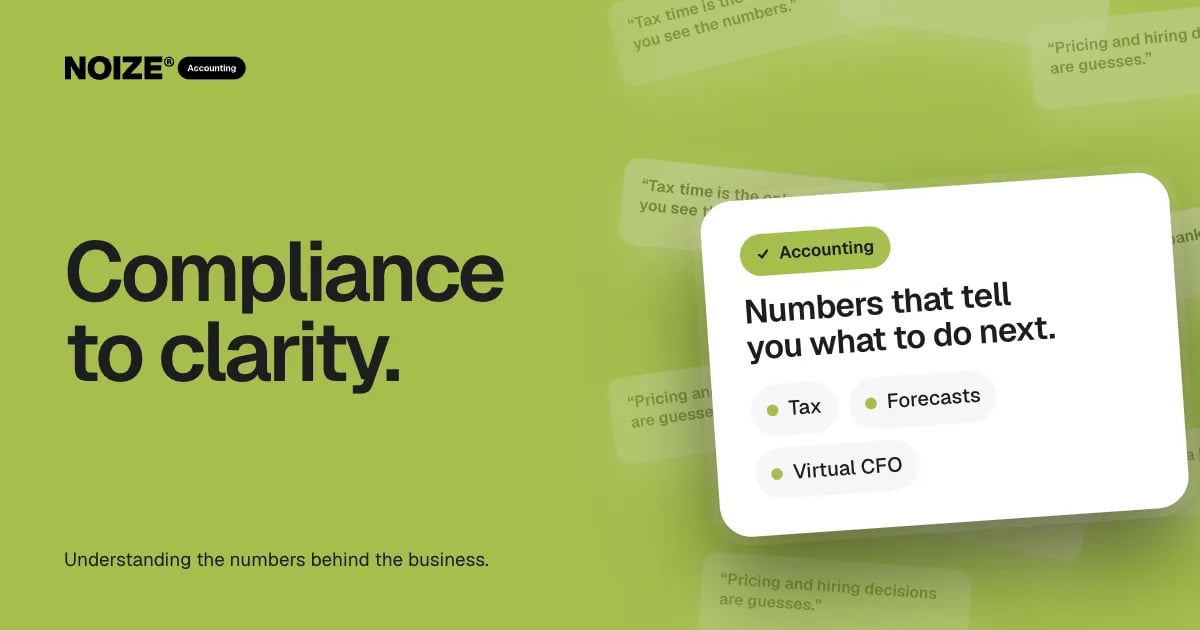
Tax time is the only time you see the numbers. No forecast, just a bank balance. Pricing and hiring decisions are guesses.
For many owners, the relationship with their accountant happens once a year. The books are handed over, the tax return comes back, a bill arrives, and the numbers are forgotten until next year. Compliance is done. Nothing has changed.
Compliance matters. Lodging correctly and on time is the minimum. But it describes the past. The real value of an accountant is helping you decide what to do next, and that conversation can't happen once a year.
The short version
- Compliance accounting looks back.
- Advisory accounting uses the same numbers to look forward.
- Year-round tax planning, cash-flow forecasting, scenario planning and virtual CFO support turn guesses about hiring, pricing and expansion into decisions made on evidence.
- It all depends on current records, which is why Accounting and Books work from the same numbers.
Looking back and looking forward
A tax return tells you what happened in a year that has already finished. A forecast tells you what is likely to happen in the year you are about to live through. Both use the same numbers. Only one helps you make decisions.
Forward-looking accounting turns last month's results into next quarter's plan. Can we afford to hire in March? What happens to cash if we drop the price by ten per cent? If we open a second site, when do we break even? Those questions have answers, and they are far better than guesses.
Tax planning is a year-round job
The best tax decisions are made well before June. Timing of purchases, the right structure, superannuation contributions and when to recognise income all need planning across the year. By the last fortnight of the financial year most of the useful options have gone.
Quarterly tax planning conversations replace the June panic with a plan. They also tend to be cheaper in the long run, because the advice arrives while it can still change the outcome.
> I've invested in dozens of ventures, and I look at a forecast before I look at a pitch deck. A founder who knows their numbers a year ahead usually knows their business. A founder with a bank balance and a feeling is taking a bigger risk than they realise.
Decisions on evidence
A simple cash-flow forecast changes the quality of decisions. Hiring stops being a gut feel and becomes a question of runway. Pricing changes can be modelled before they are announced. Expansion can be timed for when the business can carry it.
Scenario planning takes this further. What if a major customer pays late? What if sales grow faster than expected and you need more stock? Running those scenarios in advance means the business has a plan for each, rather than a scramble.
“These guys absolutely nailed our re-branding concept.”
What a virtual CFO does
Growing businesses need CFO thinking long before they need a full-time chief financial officer. A virtual CFO provides that judgement part-time: forecasting, management reporting, pricing analysis, funding preparation and board or investor updates.
For a business turning over a few million dollars, a full-time CFO is a significant salary plus superannuation, recruitment and overheads. A virtual CFO delivers the same quality of thinking at the scale the business actually needs, and can scale up as it grows.
Why clean books come first
None of this works on poor records. Advice is only as good as the numbers underneath it, and numbers that are three months behind produce advice that is three months late.
That is why NOIZE Accounting works hand in hand with Books. Books keeps the records current every week. Accounting interprets them, plans tax, and advises on the decisions in front of you. Because they work from the same records, there is no year-end scramble for missing statements, and no gap between what happened and what you know.
When the plan needs capital
Forecasts and statements also form the core of any funding case. Lenders read the numbers before they read the plan. When a forecast shows the business can service the debt, and the statements back it up, the conversation with a lender is shorter and more likely to succeed.
So Accounting hands off to Finance when the plan needs capital, with the financial case already prepared.
What NOIZE Accounting covers
Business accounting, tax compliance, tax planning, financial statements, cash-flow forecasting, budgeting, management accounting, business structuring, advisory and virtual CFO services. It suits businesses planning to hire or invest, owners reviewing their pricing, and anyone who wants insight, not only compliance.
Bring the last set of accounts and the decision you are trying to make. Understanding the numbers behind the business. See accounting.noize.com.au.
An illustrative example
Consider a hospitality group with two venues thinking about a third. The bank balance looks healthy, so the owner is ready to sign a lease. A forecast tells a different story: a large tax payment is due in two months, the second venue's margins are thinner than they looked, and seasonal trade dips just as the fit-out would be paid.
The answer isn't no. It is "not yet, and here is when". Delaying the lease by one season, adjusting the menu pricing at venue two and planning the tax payment means the third venue opens with a cushion instead of a squeeze. The numbers didn't change. Seeing them in advance did.
What good management reporting looks like
Management reports should be short and useful. For most businesses, one page each month is enough: profit compared with budget, cash position and forecast, what is owed to you and by whom, and two or three key operating numbers. Anything longer usually goes unread. Anything shorter usually misses something important.
Questions worth asking your accountant
- When did we last look at a forecast together?
- What tax decisions should we make before the end of this quarter?
- Is our structure still right for where the business is going?
- What would need to be true for us to afford the next hire?
If an accountant can answer those confidently, you have an adviser, not just a lodgement service.
How NOIZE Accounting works with you
NOIZE Accounting looks after the routine jobs: modelling decisions, reviewing margins and pricing and planning cash flow. You also get practical guidance on from compliance to clarity as part of the business strategy.
When something needs a registered tax agent, an appropriately qualified professional is involved. We agree the arrangement with you before any work begins.
Related reading
- Clear books: the foundation every other decision sits on
- Funding the next move, with the whole plan in view
This article is general information only. It is not legal, tax or financial advice, and it does not take your circumstances into account. Speak to a qualified adviser before acting.
NOIZE provides administrative support and business strategy. Where work is outside our skillset, or the law requires it, we make sure an appropriately qualified professional is involved.
Common questions
What is the difference between compliance and advisory accounting?
Compliance covers lodging tax returns and statements correctly and on time. Advisory uses the same numbers to help you plan, forecast and make decisions.
When should a business get a virtual CFO?
When financial decisions are getting bigger than the owner's time or experience allows, often around hiring, expansion, pricing changes or raising capital.
How often should I meet my accountant?
For a growing business, at least quarterly, so tax planning and forecasting happen while they can still change the outcome.
Do I need a bookkeeper and an accountant?
Usually. The bookkeeper keeps the records current; the accountant interprets them. NOIZE Books and Accounting work from the same records.
What should a monthly management report include?
Profit against budget, cash position and forecast, what is owed to you and by whom, and two or three operating numbers that matter for your business. One page is usually enough.
Is NOIZE Accounting a registered tax agent?
We handle planning, reporting and strategy directly. Where the law requires a registered tax agent, an appropriately qualified professional is involved.
Your first strategy conversation is on us.
Have a chatThe brand for business.