Clear books: the foundation every other decision sits on
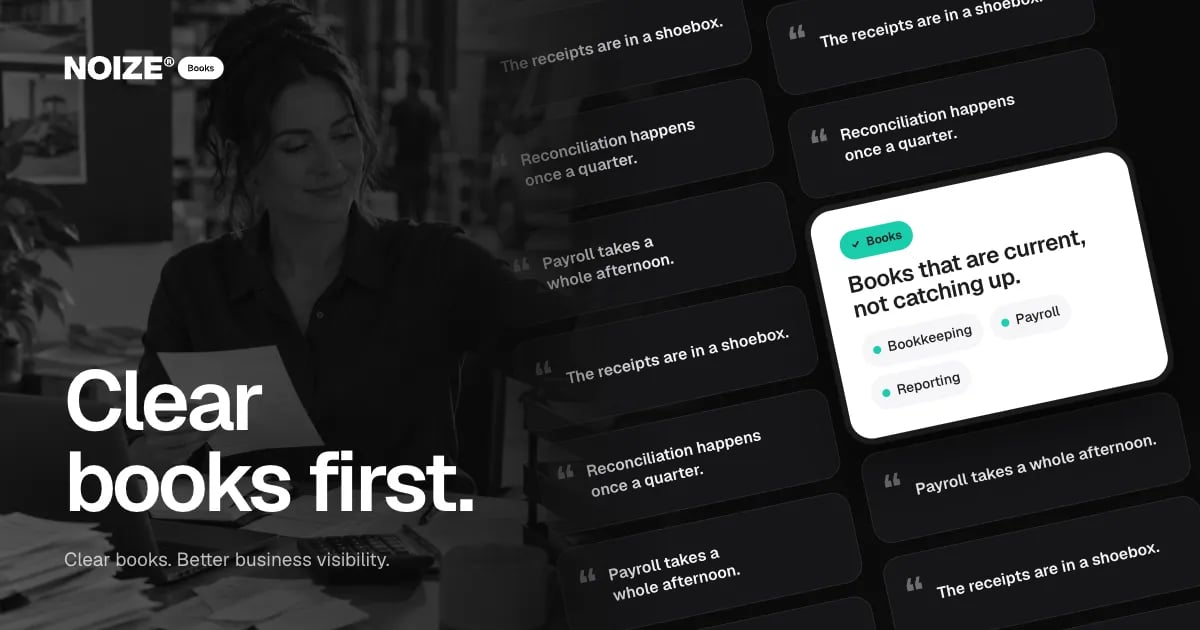
The receipts are in a shoebox. Reconciliation happens once a quarter. Payroll takes a whole afternoon.
Bookkeeping is rarely anyone's favourite part of running a business. It is also the part every other decision rests on. Pricing, hiring, marketing spend, funding and tax all depend on knowing the real numbers. When the books are three months behind, every one of those decisions is made on old information.
Here are six reasons current bookkeeping matters more than most owners think, and what changes when it is done weekly rather than caught up quarterly.
The short version
- Current books are the foundation for pricing, hiring, marketing, tax and funding decisions.
- Weekly bookkeeping means you always know where you stand, cash problems appear early, BAS and year end are straightforward, payroll is right, your accountant can advise in real time and lenders get answers quickly.
- If you are behind, catch up once, then stay current.
01You always know where you stand
With books reconciled every week, the bank balance, what you are owed and what you owe are always current. You can answer "can we afford it?" in minutes rather than after a weekend with a spreadsheet.
That clarity changes behaviour. Owners who know their position spend more confidently where it matters and catch problems before they grow.
02Cash problems show up early
Late-paying customers, creeping costs and a slow month all show up in current books as they happen. In books that are caught up quarterly, they show up three months late, when they are harder to fix.
Accounts receivable and payable managed properly means invoices go out on time, reminders go out automatically and suppliers are paid when they should be.
03Tax time stops being a panic
Current books make BAS preparation straightforward and year-end far simpler. There is no shoebox to empty, no missing statements to chase and no rush to find receipts before a deadline.
> I've built ecommerce businesses with thousands of transactions a month. The month we fell behind on reconciliation was the month we made our worst stock decision. We thought we had cash we didn't. Since then I've treated current books as non-negotiable.
04Payroll is right, on time, every time
Paying people correctly is a basic promise to the team. Payroll done properly covers awards, superannuation, leave and Single Touch Payroll reporting, and it shouldn't take an afternoon every pay cycle.
05Your accountant can give better advice
An accountant is only as useful as the records they receive. Clean, current books mean advice can be given in real time, about this quarter's decisions, rather than about last year's results. That is why NOIZE Books hands off naturally to Accounting when the numbers need interpreting.
06Lenders say yes faster
When the business needs funding, lenders ask for financials, BAS lodgements, aged debtors and bank statements. Current books mean that file is ready in days instead of weeks. Books works with Finance when the numbers support a funding case.
“Things really got moving beyond our expectations.”
Catching up, then staying current
Many businesses come to us behind. That is normal, and it is fixable. Catch-up bookkeeping gathers what exists, reconciles it, lodges anything overdue and sets the business up properly in Xero or the platform you use.
Then the important part: staying current. Weekly bookkeeping keeps the books from ever falling behind again, so the catch-up is a one-off.
What NOIZE Books covers
Bookkeeping, payroll, reconciliations, accounts payable, accounts receivable, management reporting, catch-up bookkeeping, financial administration, and BAS services where appropriately registered. It suits owner-led businesses, businesses with growing transaction volume and anyone who has fallen behind.
We use Bookkeeping for the service and Books for the department, because the whole point is clear books and better business visibility. See books.noize.com.au.
A simple monthly routine
Once the books are current, a short monthly review is enough for most owners. Look at three things: profit for the month, cash in the bank, and what is owed to you. If those three are moving in the right direction, the business is healthy. If one isn't, you know where to look.
Know where you stand.
Signs the books are holding you back
You avoid looking at the accounts because you're not sure they're right. You can't say what you're owed without checking several places. BAS is a stressful scramble every quarter. Payroll mistakes have happened more than once. Your accountant keeps asking for the same missing information. A lender or investor asked for financials and it took weeks to produce them.
Any one of these is common. Several together mean the business is making decisions without a clear view of its own position.
Why weekly beats quarterly
Quarterly catch-ups feel efficient: do it all at once and be done. In practice they are slower and riskier. Transactions are harder to identify months later. Receipts go missing. Errors compound before anyone notices. And for most of the quarter, the numbers you look at are wrong.
Weekly bookkeeping is small and routine. Each week's transactions are matched while they are fresh, questions are answered quickly, and the books are always within a few days of reality. Over a year it usually takes less total effort, and it removes the quarterly stress entirely.
Choosing the right software
Most of our clients use Xero, and we can set it up properly for businesses moving across from spreadsheets or another platform. Good setup matters: the right chart of accounts, bank feeds connected, rules for common transactions and integrations with the tools you already use. A clean setup makes weekly bookkeeping fast and reporting meaningful.
Payroll without the headache
Payroll has more moving parts than most owners expect: award rates, overtime, leave, superannuation, Single Touch Payroll reporting and payslips. Errors cost money and goodwill. A managed payroll process with clear timesheets, checked calculations and on-time lodgement turns an afternoon of stress into a routine approval.
How NOIZE Books works with you
NOIZE Books looks after the routine jobs: capturing receipts, chasing overdue invoices and preparing monthly reports. You also get practical guidance on clear books as part of the business strategy.
When something needs a registered agent, such as for lodgements, an appropriately qualified professional is involved. We agree the arrangement with you before any work begins.
Related reading
- From compliance to clarity: what your accountant should do for you
- Funding the next move, with the whole plan in view
This article is general information only. It is not legal, tax or financial advice, and it does not take your circumstances into account. Speak to a qualified adviser before acting.
NOIZE provides administrative support and business strategy. Where work is outside our skillset, or the law requires it, we make sure an appropriately qualified professional is involved.
Common questions
How often should bookkeeping be done?
For most growing businesses, weekly. It keeps the numbers current and stops work piling up before BAS and year end.
What is catch-up bookkeeping?
Bringing books that have fallen behind back up to date: gathering records, reconciling accounts and lodging anything overdue.
What is the difference between a bookkeeper and an accountant?
A bookkeeper keeps the day-to-day records current. An accountant interprets them, handles tax and advises on decisions. NOIZE has both, working from the same records.
What do you need to get started?
Tell us your software, your transaction volume and how far behind you are.
Can you work with Xero?
Yes. We set up, clean up and manage Xero for many clients, along with the bank feeds and integrations around it.
What does weekly bookkeeping include?
Reconciling bank and card transactions, processing bills and invoices, chasing what is owed, keeping payroll records current and preparing simple reports, so the books always reflect where the business is this week rather than last quarter.
Your first strategy conversation is on us.
Have a chatThe brand for business.