Building a team around the business
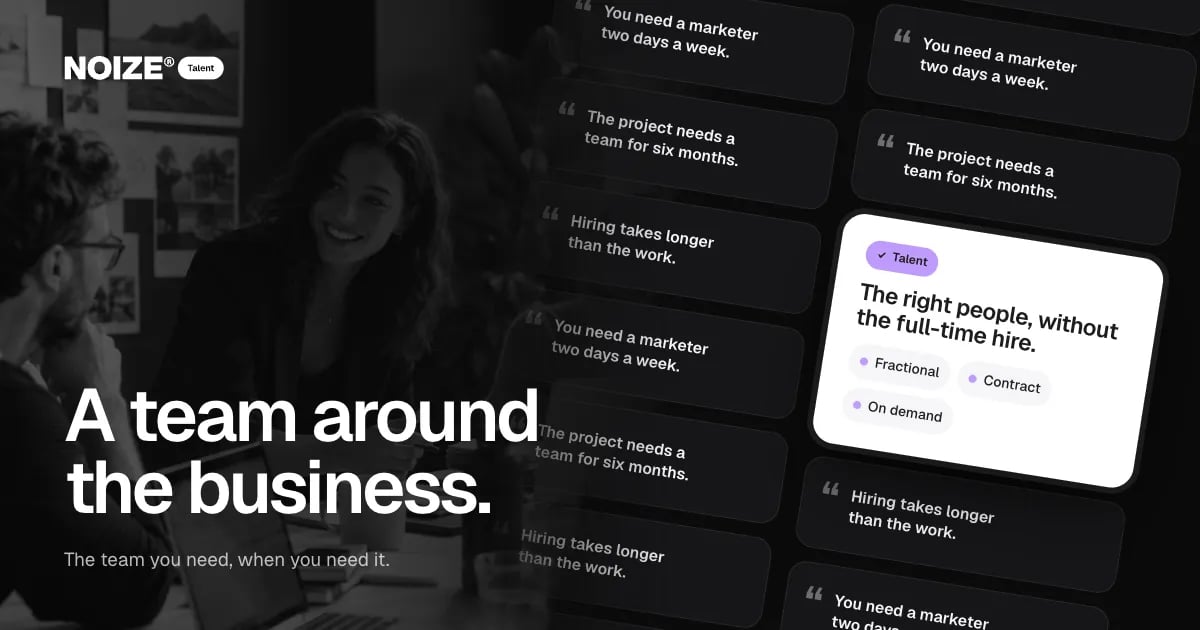
You need a marketer two days a week. The project needs a team for six months. Hiring takes longer than the work.
For most of the last century, building a team meant one thing: advertise a full-time role, interview, hire, onboard, and hope the role still made sense a year later. For a growing business that model is slow, expensive and often wrong. The work changes faster than the org chart.
There is a better starting question. Not "who should we hire?" but "what capability does the business need, for how many hours, for how long?" Answer that honestly and the team starts to look very different.
The short version
- Growing businesses need capability before they need headcount.
- Fractional, part-time, contract and on-demand roles bring experienced people in within days, sized to the hours the work actually needs.
- They succeed when the scope, owner, access and measures are set up front, and when people walk into a working system.
- Permanent hires still make sense once a role is stable and fully defined.
Capability before headcount
A business in growth rarely needs a full-time chief marketing officer, chief financial officer or operations manager. It needs the judgement those people bring, a few days a week, while the business grows into the role.
Fractional roles provide exactly that. A senior person works two days a week, or one, or three, on the problems that need senior attention. The business gets experience it couldn't otherwise afford, starting this month rather than in a quarter.
The same logic applies further down. A project needs a designer, a developer and a coordinator for six months. A seasonal peak needs extra hands for eight weeks. A specialist skill is needed for one job. Contract, project-based and on-demand engagements fit each of those without committing the business to permanent headcount it may not need next year.
Why hiring takes so long
The permanent hiring process has a lot of steps, and each one waits on the last. Write the job ad. Wait for applications. Shortlist. Interview. Second interviews. Offer. Notice period. Onboarding. For a senior role, three to four months is common. If the first offer is declined, start again.
Meanwhile the work waits, or the owner does it. That is the hidden cost of a slow hire: the opportunity sitting idle and the founder stretched further.
> I've built teams in several businesses, and the hires I regret most were the ones made too early, for a role we hadn't properly defined. The best decisions were the ones where we brought someone in for a few days a week first, learned what the role really needed, and then decided.
Making a part-time role work
Flexible roles fail for full-time reasons. Unclear scope. No access to systems. No single owner. No measure of success. A two-day-a-week marketer with no brief and no logins will spend those two days asking questions.
The fix is simple and often skipped. Before the person starts, write down the scope, the hours, the owner and the three things that would make the engagement a success. Make sure the devices, accounts and access are ready, which is where IT comes in. Set a regular rhythm so the person stays connected to the team even when they aren't in the building.
Do those four things and a part-time role delivers from week one.
“Couldn't recommend these guys enough.”
People need a system to walk into
The other common failure is putting good people into a business with no process. A new salesperson with no CRM, no playbook and no leads will struggle, and eventually leave, regardless of talent.
That is why NOIZE Talent hands off naturally to Sales when the people need a system, and to Marketing when they need a plan. The system comes first. Then the people walk into something they can run, and perform sooner.
Team on Demand
For many clients, the simplest model is access to the NOIZE team itself. Team on Demand gives a business fractional access to specialists across the group: strategy, design, digital, marketing and more, drawn on as needed rather than hired individually.
It suits businesses that need a little of several capabilities rather than a lot of one. Instead of five part-time hires, they have one arrangement and one point of contact.
Engagement models, plainly
Fractional: senior capability for part of the week, usually on an ongoing basis. Part-time equivalent: a set number of days, often for a defined function. Full-time equivalent: a dedicated person, without the business carrying the employment overhead directly. Contract and project-based: a person or team for a defined piece of work and period. On-demand: capability called on as needed, often across several skills. Embedded team members: people who sit inside your team and work as part of it.
Most businesses use a mix, and the mix changes as the business grows. That flexibility is the point.
When a permanent hire makes sense
Flexible talent isn't a replacement for every permanent role. Once a function is stable, well defined and needed full time, a permanent hire often makes sense, and the fractional period will have shown exactly what that role needs.
Talent can help with that too: recruitment, team structure and onboarding, so the permanent hire starts with the same clarity the flexible engagement had.
Get the people. Skip the wait. See talent.noize.com.au.
An illustrative example
A growing ecommerce business needs better marketing, cleaner finances and a new website, all in the same year. The traditional answer is three hires, months of recruiting and a large fixed payroll.
The flexible answer looks different. A fractional marketing lead two days a week sets the plan. A virtual CFO one day a fortnight sorts the numbers. A project team builds the website over three months and then hands over. Within weeks all three are moving, and the business learns which roles it eventually wants to make permanent.
What to tell us
Tell us the capability you need, the hours and how long. We shape the engagement around it, and if the right answer is a permanent hire, we'll say so.
Related reading
Common questions
What is a fractional role?
A senior specialist who works part of the week for your business, usually on an ongoing basis, giving you experienced capability without a full-time salary.
How quickly can someone start?
Often within days rather than months, depending on the role. Tell us the capability, the hours and how long, and we shape the engagement around it.
Can a fractional person become permanent?
Sometimes. The flexible period often shows whether the role should become permanent and what it really needs.
What is Team on Demand?
Fractional access to specialists across the NOIZE group, drawn on as needed, under one arrangement.
Is flexible talent more expensive per hour?
Sometimes, but you pay only for the hours you use and avoid recruitment fees, idle time and long notice periods. Overall it is often cheaper for roles that don't need five days a week.
What roles work best on a fractional basis?
Senior roles where judgement matters more than hours, such as marketing, finance and operations leadership, plus specialist skills needed for part of the week.
Your first strategy conversation is on us.
Have a chatThe brand for business.