How 'Got Milk?' made drinking milk cool again.
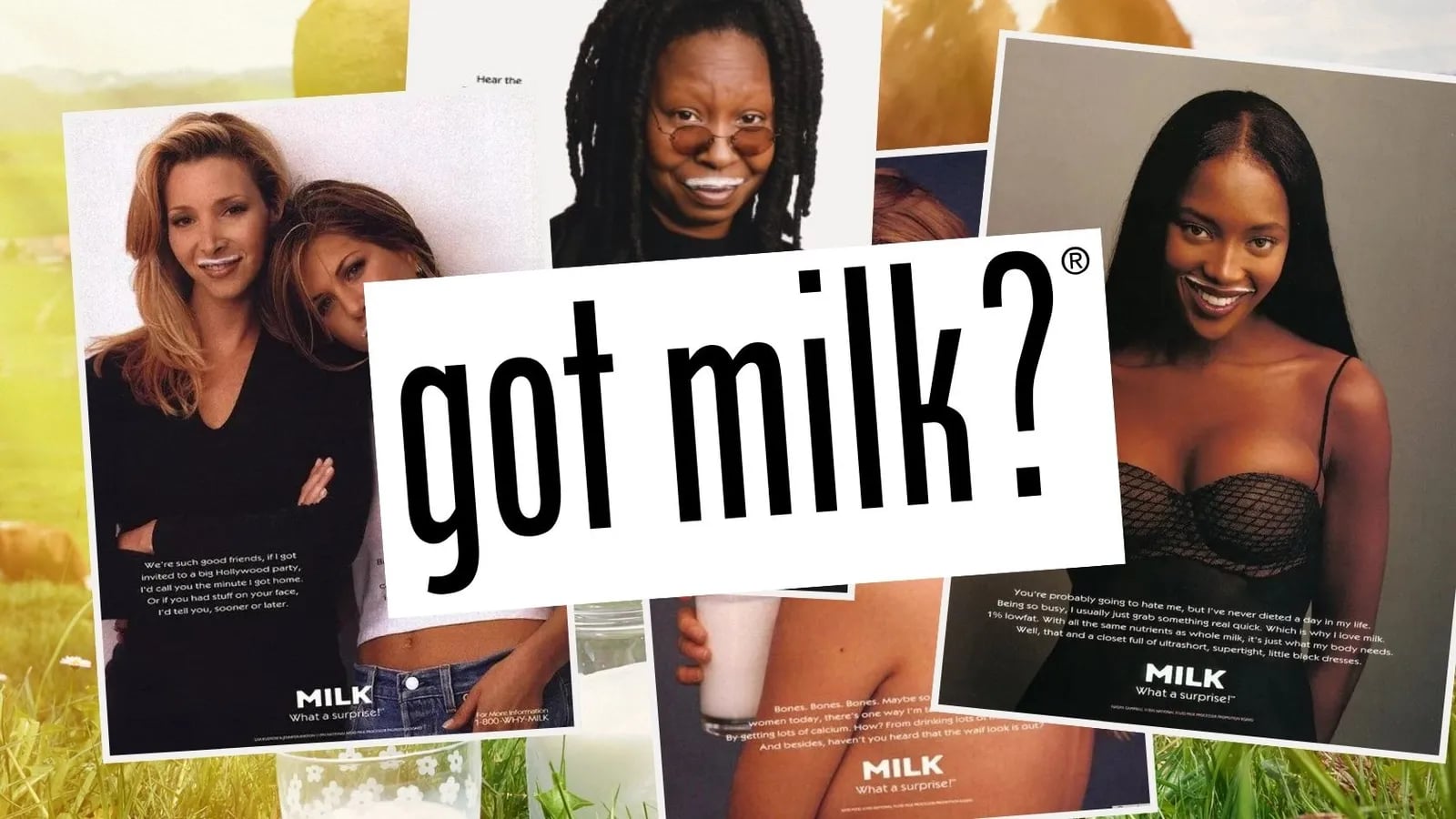
How do you make something as ordinary as milk cool? In 1993, the California Milk Processor Board did exactly that with the "Got Milk?" campaign. With nothing more than a catchy slogan and some milk moustaches, they turned a basic beverage into a cultural touchstone.
The problem they were solving
At the time, milk wasn't exactly exciting, especially to younger audiences. Consumption was declining. The category had no personality, no aspiration, and no cultural relevance. The brief was simple: make people care about milk again.
The insight that changed everything
Instead of leading with health benefits, the campaign took a different approach entirely. They made milk fun and relatable. Celebrities, from athletes to actors, wore those now-iconic milk moustaches, instantly making the product feel cooler than it had any right to be.
The two-word slogan, "Got Milk?", was catchy, memorable, and soon became part of pop culture. It didn't explain the product. It didn't list the benefits. It just made you feel like you were missing out if you didn't have it.
Why it worked
The campaign did more than sell milk, it made it relevant again. By focusing on humour, nostalgia, and celebrity appeal, "Got Milk?" became a rallying cry for a generation.
The lesson is simple: sometimes, simplicity is the key to success. A catchy slogan and fun, relatable visuals can create long-lasting brand awareness. It's not always about reinventing the product, sometimes, it's about finding a fresh, creative way to present it.
What this means for your brand
Is your brand message simple and catchy enough for people to remember and share? How could you pair a relatable message with fun or iconic visuals that stick in people's minds? What product or service do you offer that could benefit from a fresh cultural reframe?
The brands that win are the ones that understand their audience deeply enough to meet them where they are, not where the brand wants them to be.
Your first strategy conversation is on us.
Have a chatThe brand for business.