Website conversion: how to get more from the traffic you already have
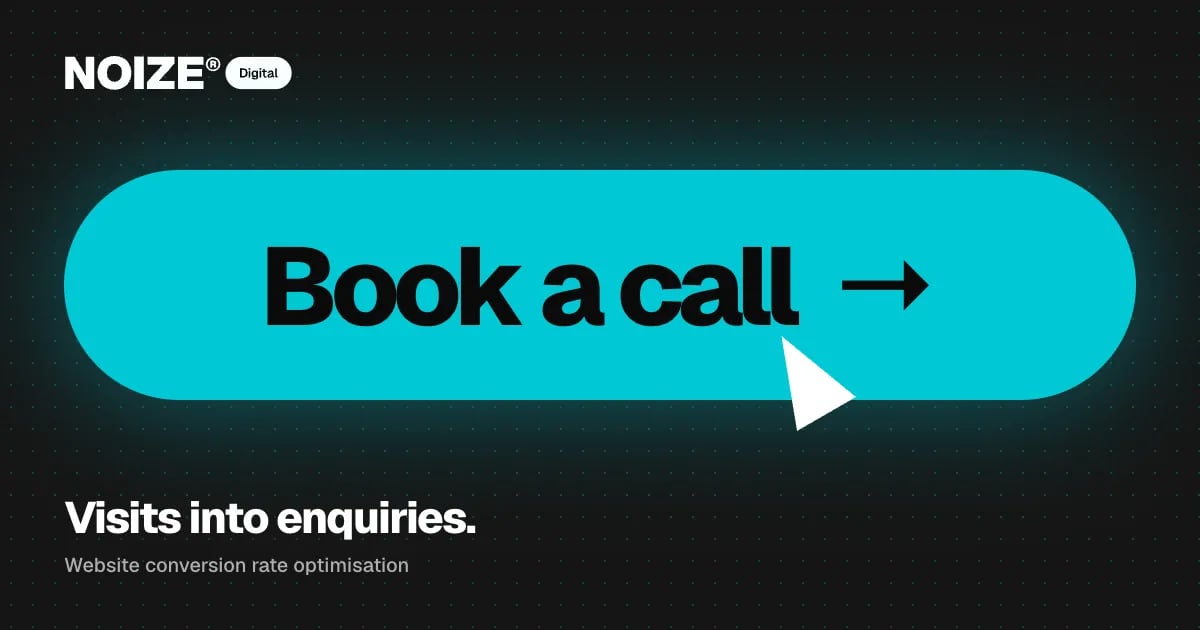
Most businesses try to grow by getting more traffic: more SEO, more ads, more social media. The idea is that more visitors means more customers.
There's a cheaper way. Picture a website where 2 in every 100 visitors get in touch. Double the traffic and you double the enquiries, but you also double the ad spend. Lift that to 4 in every 100 and you double the enquiries without spending another dollar on traffic.
The short version
Conversion rate optimisation means getting more enquiries or sales from the visitors you already have. It works by removing friction, which is anything that makes acting harder, and adding confidence, which is anything that makes people trust you. The biggest wins usually come from a clear headline, proof near the top of the page, one obvious next step, a fast page and a good mobile experience. Track conversions properly, then keep testing.
What conversion optimisation really is
It isn't about tricks. It's about two things.
Friction is anything that makes it harder for a visitor to do what you want: confusing menus, slow pages, long forms or a button that's hard to find.
Confidence is anything that helps a visitor trust you enough to act: reviews, clear pricing, specific claims, a professional design or a guarantee.
Most websites have too much friction and not enough confidence. Conversion work fixes both.
The changes that matter most
01A clear headline
The headline is the first thing people read. If it doesn't say straight away what you do and who it's for, most visitors leave. Make it specific.
02Proof near the top
Reviews, client work and results. Put the proof where people see it without scrolling.
03One clear next step
Most websites offer too many options. Give visitors one obvious thing to do, and make it easy.
04A fast page
Every extra second of load time costs enquiries. A page that loads in two seconds converts noticeably better than one that takes five.
05A good mobile experience
More than half of web traffic is on phones. If the site is hard to use on a phone, you lose a big share of your potential customers.
How to measure it
You can't improve what you don't measure. Set up conversion tracking in Google Analytics and decide what counts as a conversion for you: a form, a call, a purchase or a booking.
Then track the conversion rate by page, by traffic source and by device. The numbers will show where the biggest gains are.
Keep testing
Conversion work never really finishes. The best websites test all the time: a different headline, a different button, a different layout. Not every test wins, but the wins add up.
Treat the website as a working asset, not a one-off project. More traffic only helps if the site converts, so get this right before you scale SEO or ads.
Start with one
NOIZE Digital builds and improves websites around how your customers buy. NOIZE Marketing then brings the right traffic to them.
Common questions
What is a good website conversion rate?
It depends on your industry and what counts as a conversion. Compare against your own starting point and aim to improve it steadily.
What should I fix first?
Usually the headline, the main call to action and page speed. They are quick to change and often make the biggest difference.
Do I need a new website to improve conversion?
Not always. Many gains come from changes to an existing site. A rebuild makes sense when the platform itself is slow or hard to update.
How do I track conversions?
Set up conversion events in Google Analytics for forms, calls, bookings or purchases, and connect your ad accounts so you can see which campaigns bring results.
Your first strategy conversation is on us.
Have a chatThe brand for business.